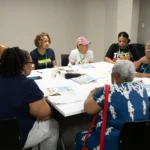

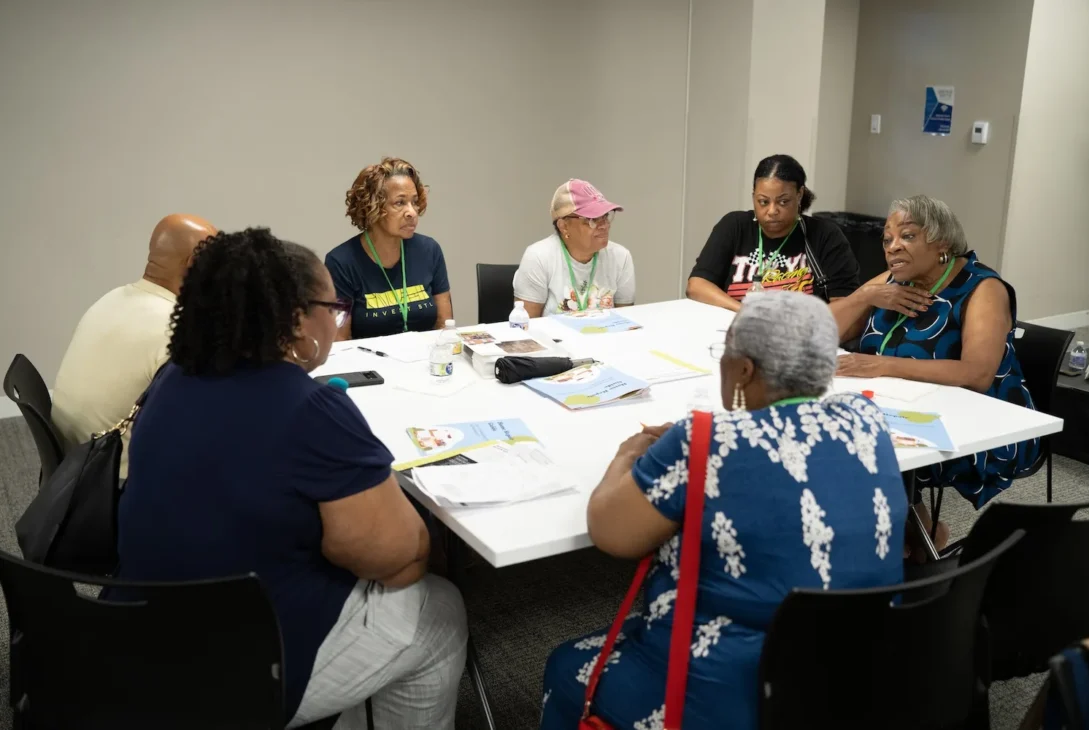
This month, Invest STL brought together 50 Black residents from the West End and Visitation Park neighborhoods at Delmar Divine to celebrate the completion of a groundbreaking three-year initiative. The Rooted: Cultivating Black Wealth in Place program distributed $22,000 to each participant—$2,000 for immediate expenses and $20,000 designated for investment purposes.
Michelle Witthaus, Invest STL’s policy design and activation lead and architect of the Rooted program, explained to attendees that the West End and Visitation Park neighborhoods, located north of Delmar Boulevard between Skinker and Union Boulevards and south of Page Boulevard, have experienced significant external investment pressure. “Beginning in 2017, outside investors began acquiring properties in the neighborhood,” she noted, adding that this trend has created situations where “people are trying to purchase your home at bargain prices.”
Get a fresh take on the day’s top news
We will never send spam or annoying emails. Unsubscribe anytime.
Witthaus highlighted a striking statistic: one census tract near Delmar Boulevard has experienced nearly a 400 percent growth in its white resident population over the past decade. However, her data also revealed that residents who relocated during this period chose to move to other homes within the same neighborhoods, demonstrating their commitment to staying. How can Black residents who wish to remain in the West End and Visitation Park overcome the financial obstacles that threaten to displace them?
Invest STL’s solution centers on prioritizing direct investment in residents rather than solely in physical spaces. The organization believes that when residents receive unrestricted funds to use as they deem appropriate, they can maintain homeownership and resist displacement pressures from rising investor interest.
The results of Invest STL’s efforts are impressive. The Rooted cohort has launched five new businesses and expanded two existing ones, established 24 investment accounts, and funded major home repairs for 25 households. Additionally, the nonprofit assisted 16 families in securing beneficiary deeds, ensuring home equity remains within families across generations.
The cohort members who spoke with SLM expressed strong enthusiasm about their experience using the investment funds.
Angela Martin, a West End resident for over a decade, started her home health business following her husband’s death. When Invest STL conducted a lottery to select program participants, Martin received the life-changing call. “At that moment, I realized, ‘This is a gift from my husband,'” she recalls.
Drawing on her 20 years of healthcare expertise, Martin established Exquisite Home Healthcare, which now employs approximately 20 people. The Rooted funds covered office space rental and equipment, providing six additional months of stability before she assumes full costs independently. Martin believes the financial support has put her on a trajectory toward long-term success beyond the initial investment period.
Starting a business presented challenges, including licensing expenses, but Martin felt motivated by Invest STL’s support system, which included pairing her with a financial advisor. “What keeps me moving forward is knowing they believed in me,” she explains. “Even though it was a random selection, fate gave me this chance.”
Michelle Wallace, who has lived in her West End home since 1972, invested her funds into essential plumbing upgrades. Her large home requires substantial heating expenses, and certain sections experience recurring plumbing problems during winter months. She determined that prioritizing these repairs would provide the greatest long-term benefit. Although some issues persist, the improvements have made a noticeable difference.
Wallace has observed positive neighborhood changes in recent years and credits Invest STL with helping her connect with previously unknown neighbors through the program.
“I hope everyone will make improvements to their homes and choose to remain in the community,” she says about her hopes for the future. “Let’s maintain our properties, beautify our yards, greet our neighbors, and respect each other’s privacy.”
Genet Conyears, who also used her funds for home repairs, was the final person selected for the program. Growing up in the West End, she found the Rooted initiative meaningful as a sign of community respect. “Normally you have to be in crisis to receive assistance,” she reflects. “This felt like they valued us.”
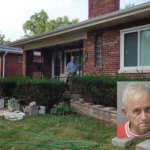
Conyears appreciated the program’s simplicity, requiring only minimal paperwork. At the celebration event, she proudly displayed before-and-after photographs documenting her home improvements, including a new entry door, restored front porch, and various upgrades.
“When someone provides you with substantial funding like this, that’s remarkable and an important achievement,” Conyears says.
Doris House (a fitting surname, as she humorously notes) credits the Rooted funds with restoring her hope. She allocated the money toward two home improvement projects. Her residence dates to the 1904 World’s Fair era; she is currently living elsewhere during rehabilitation and expects to return by year’s end. During repairs, she discovered additional issues requiring attention, including electrical problems. She particularly benefited from consultation with financial planning professionals.
“I valued the opportunity to enhance my property’s material worth in the neighborhood,” House explains. “I was grateful for the chance to make improvements, but I primarily learned how to navigate contracts.”
While House appreciates the knowledge and support received, she recognizes the broader significance of the Rooted program’s impact.
“Quietly, it empowered residents,” House reflects. “Money and knowledge matter, but without feeling genuine power, people won’t act on those resources because they lack confidence in their ability to implement change.”
Why it Matters: As St. Louis confronts ongoing challenges from historical disinvestment in predominantly Black neighborhoods north of Delmar, Invest STL’s Rooted program represents an innovative approach to address these issues while strengthening neighborhoods and supporting current residents.
According to Invest STL, the program “reimagines conventional approaches by recognizing that: direct cash investment in people enables long-time residents and community institutions to maintain their place and continue their work.”
What’s Next: The Urban Institute, a Washington D.C.-based research organization, will publish findings from its study of the Rooted pilot program later this year, assessing the initiative’s impact and effectiveness.
Program participants report that they have been positioned to achieve improved quality of life and build lasting wealth for families with deep roots in the West End and Visitation Park.
“Collectively, you represent over 500 years of commitment to this neighborhood, of investing your love and care, of stewarding it for future generations,” Invest STL CEO Dara Eskridge told the cohort. “This accomplishment belongs to you, not to any program. You chose to say: This place deserves respect, regardless of external perceptions. You decided: This community is worth protecting, worth nurturing, worth living in, worth building families in. And then to leave these assets for the next generation—that is something truly extraordinary.”