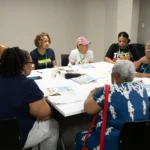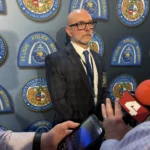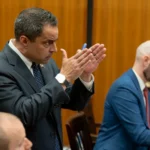

The state-appointed Board of Police Commissioners will open its doors to public comment at Wednesday’s meeting for the first time since October—and observers expect a significant response.
St. Louis Mayor Cara Spencer’s escalating disputes with fellow commissioners have drawn support from various community voices. Prominent Post-Dispatch columnist Bill McClellan recently published a column reversing his previous stance on state police control, noting, “Things started badly and have steadily gotten worse.” Additionally, State Rep. Steve Butz (D-St. Louis), a rare Democratic supporter of state control, recently sent a letter to Gov. Mike Kehoe expressing concern that “much of the goodwill surrounding the board’s formation is beginning to erode within the city” and requesting intervention.
Get a fresh take on the day’s top news
We will never send spam or annoying emails. Unsubscribe anytime.
City aldermen are picking up on the same discontent from residents.
While budget disagreements among board members don’t typically generate public outcry compared to infrastructure issues like uncleared streets or delayed trash collection, this situation appears to be an exception. Alderman Shane Cohn reports that public sentiment about the board has become a frequent topic of concern. “I genuinely have not seen people this upset with the police department in my tenure here,” he says. Cohn has held office for 17 years.
Alderwoman Daniela Velazquez shares similar observations from Ward 6, which encompasses Tower Grove Park and portions of Dutchtown and Compton Heights. She describes constituents as “kind of aghast,” noting that even conservative residents worry about police funding reducing resources for other essential services—a concern Spencer has repeatedly highlighted. The consistent question from constituents, according to Velazquez, is: “Why are they doing this?”
Alderman Bret Narayan acknowledges that his Dogtown neighborhood is generally supportive of police and initially welcomed state oversight. However, he cautions, “There have been frustrations. It all depends on this budget. If we see cuts to essential city services, people are going to be unhappy.”
Alderwoman Anne Schweitzer reports similar feedback from her constituents in deep South City, who object to forcing choices between trash pickup and police funding. “The people of the first ward support the police. They also support every other essential city service. It’s frustrating to them when they feel like those service providers aren’t working together.”
In a Friday phone conversation, Butz explained that his concerns stem from accumulated issues rather than a single incident. Both publicly and in his letter to the governor, Butz largely attributes the problems to board attorney Chris Graville. “I’m not saying he’s a bad attorney or anything, but just not the right guy at the right place, doing the right job.” He used a baseball analogy, noting that fans shouldn’t know the umpire’s name. His correspondence with Kehoe suggested Jane Dueker as a potential replacement.
Board President Chris Saracino responded with a written statement defending Graville’s work, saying, “As the Board works to remove politics from policing, we remain fully confident in Attorney Chris Graville and his team.” Saracino emphasized that Graville’s counsel has been “invaluable in supporting the SLMPD and helping navigate the complex transition to citizen-led governance.”
It should be noted that Butz is currently campaigning for a state Senate seat. His primary opponent, Gina Mitten, has had her campaign workers highlight Butz’s vote supporting the board’s creation. Butz maintains he doesn’t regret his position, believes the board can be improved, and has been forthright about his stance during campaign interactions.
Wednesday’s agenda also includes contested salary increases for command staff that Spencer has opposed, though board officials indicate Wednesday’s public comment session isn’t a response to any particular matter. The board intends to establish quarterly public comment periods moving forward. According to McCoy, “Strong public safety outcomes are built through collaboration, transparency, and a willingness to listen to the community we serve.”
The board’s regulations allocate 45 minutes for public comments, with individual speakers receiving up to five minutes each. The board president has authority to extend speaking opportunities beyond this limit.
Multiple observers at City Hall on Friday predicted substantial attendance at Wednesday’s event—significantly higher than October’s public comment session, which drew only six speakers.
“Everybody’s going to be there,” remarked one city police observer. A colleague echoed the sentiment: “Where else is the public going to get their scream time? I support it.” Another attendee estimated higher turnout than the previous six speakers but predicted participation would primarily come from opposing factions.
Alderman Rasheen Aldridge has been the most vocal alderman regarding the Police Board. As chair of the city’s Budget and Public Employees committee, he faced resistance when requesting the police department to present their budget at City Hall in May. Instead, the department submitted what Aldridge described as “700 pages of nonsense.”
Aldridge confirms his intention to attend Wednesday and has been promoting attendance among colleagues.
“Sounds like you’ve been spreading the word,” I said.
“I’ve been spreading the love,” he replied.