
Zach Chasnoff says he contacted police five times over five consecutive nights regarding disruptive youth in his LaSalle Park neighborhood. The teenagers were setting off fireworks, igniting a dumpster, and making threatening statements toward him and his wife. However, when officers finally arrived on Friday night, it was Chasnoff who ended up in handcuffs.
Chasnoff and his neighbors believe this incident reflects their mounting frustration with rowdy adolescents and inadequate police response. The police department, meanwhile, argues the situation highlights the need for additional officers in the St. Louis Metropolitan Police Department.
Get a fresh take on the day’s top news
We will never send spam or annoying emails. Unsubscribe anytime.
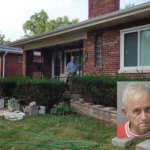
At 48, Chasnoff has resided in the neighborhood directly south of downtown for over six years. The area is marked by contrasts: one side features tree-lined streets with red brick duplexes and townhouses similar to those in Lafayette Square, complete with public media and environmental organization signs alongside Teslas and Subarus. Low-income housing projects sit just a two-minute walk away. Chasnoff’s home sits directly at this intersection. As a city resident, he is accustomed to fireworks celebrations that typically extend from June through September.
“Our neighborhood, like most urban areas, experiences a certain level of fireworks activity spanning June through September,” he explains. He had never contacted police about fireworks previously. “However, this year was notably different.”
Starting June 8, residents reported seeing larger groups of youth in the streets igniting increasingly powerful fireworks. “They were commercial-grade explosives—really loud, like M-80s,” Chasnoff describes. At night, the neighborhood resembled a combat zone, as demonstrated in video recorded by a resident during that period. Neighbor Ben West observed that the youth weren’t launching fireworks skyward but were instead directing them horizontally at one another in a series of escalating explosions. “Rather than using Roman candles, they were firing large rocket-style fireworks that create starbursts in the air—but they were shooting them at ground level toward each other, creating massive explosions,” West explains.
On Monday, Chasnoff phoned the non-emergency police line, but officers never appeared. The disruptions resumed Tuesday night, prompting another call—and again, no response. This pattern continued through Wednesday and Thursday, according to residents. Neighbor Debra Aerne witnessed youth targeting the residence of a woman from the housing projects who had filed a complaint. “They completely lit her place up,” one neighbor told Aerne.
Police documentation indicates twelve service calls that week for fireworks disturbances originating from LaSalle Park, beginning Wednesday and continuing through Saturday. This count excludes additional 911 reports classified as general peace disturbances. “Each night, the situation was becoming more severe,” Chasnoff notes.
Police department spokesman Mitch McCoy explains that like all major police agencies, they prioritize incoming 911 calls. Officers responding to fireworks cannot be dispatched if they’re already addressing more critical emergencies, such as shootings.
“This reflects the reality we face,” he states. “We’ve consistently communicated that additional police officers are necessary.”
He also shares that data indicates the SLMPD reaches “priority one” incidents—such as shootings—in approximately five minutes on average.
The situation escalated significantly on Friday, when approximately 10 youth expanded to 30 or 40, according to Aerne. The pedestrian mall at 10th and Hickory—situated between the housing projects and the residential areas—filled with fireworks smoke. Residents approached the youth and suggested they relocate to an uninhabited block, but they refused to leave. Two homes sustained damage, and Aerne suspects youth intentionally set off fireworks to obscure gunfire. “The atmosphere became significantly more dangerous with substantially more violent activity occurring,” Chasnoff observes. Multiple neighbors confirmed they made multiple police calls, as did Chasnoff.
Roughly an hour into the chaos, while Chasnoff and his wife monitored their property, two officers arrived in an SUV through their alley. Chasnoff signaled to them and pointed toward where the explosions were happening. “This situation must be stopped immediately because someone will be seriously injured,” he told them. The officers indicated they would investigate.
However, Aerne recalls that they simply drove through the neighborhood with sirens activated, temporarily dispersing the crowd. The moment they departed, the disturbances resumed. A dumpster was set ablaze. Chasnoff reports that youth surrounded his wife, threatening to kill him, assault her, break into homes, and steal dogs—”all manner of violent threats.” At that point, Chasnoff had retrieved a firearm and displayed it in his waistband. The group then retreated.
Chasnoff acknowledges being in an extremely heightened emotional state when, five days after his initial non-emergency call and two hours after the alley confrontation, officers arrived once more. Chasnoff thought these were the same officers who had driven away without taking action earlier. He immediately began shouting at them: “Thanks a fucking lot for nothing.”
At this moment, numerous neighbors began filming the encounter on their phones.
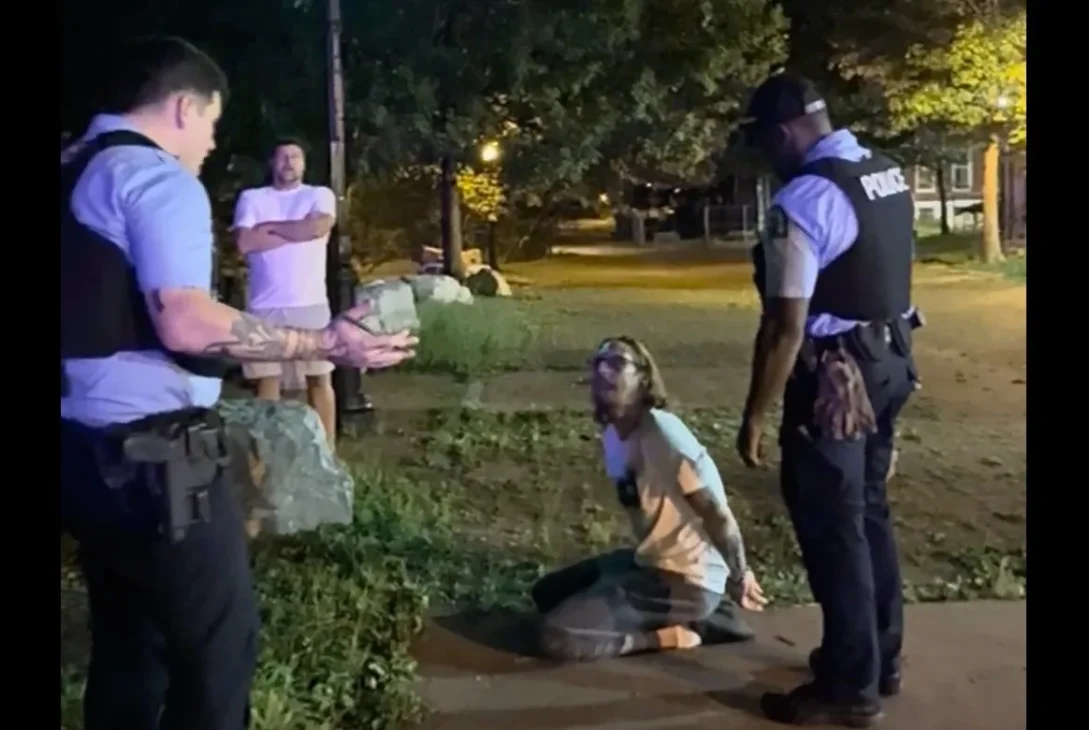
As Chasnoff turned and walked toward his residence, someone from the housing complex yelled at police to “tase his ass.” An officer drew a taser, commanding Chasnoff to lie down. The taser activated but did not discharge. Chasnoff complied by kneeling. An officer placed him in restraints. “Great job,” Chasnoff remarked.
“I just arrived,” the officer responded. “I have no context about what’s happening.”
“Yeah, you just got here.”
The officer mentioned that only four officers were assigned to cover eighty calls in the district. “But we’re not fulfilling our responsibilities, correct?” he questioned. “We’re at the bottom of the hierarchy. What exactly would you have us do?”
“Do your job.” Chasnoff replied, continuing, “Like I do mine every single day.”
The officer inquired about his profession; Chasnoff indicated he operates an independent painting business. “Could I apply with your company?” the officer asked. Chasnoff agreed. The officer said, “I’m relieved.” He then stated, “You can’t just approach us yelling like that!” Following further discussion, Chasnoff’s demeanor improved.
Nevertheless, police proceeded with documentation of his detention. As Chasnoff remained kneeling and handcuffed while officers prepared a citation, another resident stepped up to speak with the officer. “You’re focusing on the wrong person,” he said quietly. A different neighbor approached with information about the fireworks situation, hoping the officers would listen. “This isn’t the right priority because our neighborhood has been set on fire,” a woman stated.
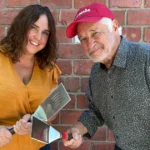
Chasnoff comes from a family with a history of police abolition activism; his father, John, was a prominent activist in this movement. The younger Chasnoff, however, is known by locals as someone who collaborates effectively with area police and works to bridge neighborhood divisions. The previous year, he and artist Simiya Sudduth completed a community mural, supported by ARPA for the Arts funding. As leaders in the LaSalle Park Neighborhood Association, Chasnoff and his wife worked alongside Purina, whose corporate offices are nearby, to establish high-definition surveillance cameras throughout the area. Yet by Friday evening, he had reached his emotional limit.
When police released Chasnoff without arrest that evening, neighbors assumed the matter had concluded. Instead, Monday brought officers to his door with a summons. He must appear in court on August 25, facing a charge of disturbing the peace.
Neighbors generally concur that Chasnoff should have remained composed during his interaction with officers (though they also note that officers escalated the situation rapidly by threatening tasers). They find it astounding that police took time to issue him a summons while seemingly disregarding the five-day cycle of fireworks, gunfire, and street violence that made their neighborhood nearly uninhabitable.
Residents point out that the St. Louis Housing Authority maintains a yearly contract with police valued at approximately $1.2 million for dedicated patrols in the LaSalle Park housing development. When the department lacks staffing, it’s not required to continue patrols (and doesn’t bill for the services). Yet the federally-funded Housing Authority has neglected to allocate these funds to an alternative security provider, despite neighborhood conditions declining noticeably in recent months.
Residents are calling for the housing authority to improve neighborhood safety. Additionally, they want the downtown curfew implemented by the mayor to extend several blocks into their area.
Jami Cox Antwi, the neighborhood’s alderwoman, attended a community gathering shortly after Chasnoff’s detention. “Neighbors expressed valid frustration,” she remarks. She considers extending the curfew as a realistic option. The presence of children as young as seven on streets late into the night without parental supervision is, in her view, “something the city should prohibit.” However, she notes that enforcing a curfew requires police presence.
LaSalle Park residents take pride in their community’s cross-income friendships. They emphasize that not just affluent homeowners but residents of the housing authority have been victimized by the fireworks violence. They believe targeted law enforcement intervention could address the core issue: they suspect an unlicensed fireworks supplier is trucking in large quantities to sell to local youth. Residents have documented the supplier’s vehicle. They’re confident the neighborhood’s surveillance system could provide evidence of these activities.
However, without stronger police cooperation and increased assistance from city and federal leaders, they’re losing hope.
“We’ve invested significant resources and effort here,” Aerne states. “Nobody wants to leave. Yet I suspect several families will relocate following this week.”
Early Sunday morning, approximately one day following Chasnoff’s detention, a shooting occurred in the same LaSalle Park location. The Purina-funded high-definition cameras captured images of the suspected shooters, both dressed entirely in black and wearing masks. Around 8 a.m. on Sunday, different cameras recorded one individual still wearing identical clothing, strolling through the pedestrian area back toward the housing projects with a gun visibly hanging at his side.
According to the police report, officers responded around 2 a.m. on Rutger Street, approximately one block from Chasnoff’s residence, finding an adult male with non-life-threatening gunshot injuries. He reported hearing fireworks and confronting the people responsible. Those individuals responded by shooting him with a firearm.